2026 ECO-LOGICAL INTELLIGENCE LIFETIME ACHIEVEMENT AWARD
SPONSORED BY

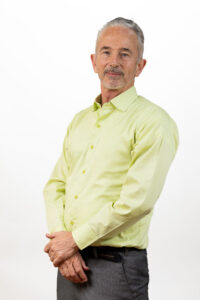
For more than three decades, Dr Crispian Olver has worked at the intersection of environmental protection, democratic governance and sustainable development. His career has moved from medicine and anti-apartheid activism to rebuilding public institutions, shaping South Africa’s environmental framework, confronting corruption in local government, and leading South Africa’s just climate transition.
A medical doctor by training, Olver worked in the Eastern Cape and became active in the democratic movement during the 1980s and early 1990s. After South Africa’s first democratic election, he joined President Nelson Mandela’s Reconstruction and Development Programme Office as head of its planning unit. He subsequently served as Deputy Director-General responsible for local government, contributing to legislation and institutional reforms that created a democratic system of municipalities.
From 1999 to 2005, Olver was Director-General of the Department of Environmental Affairs and Tourism. He played a central role in developing South Africa’s post-apartheid environmental legislation, climate policy and institutions. He oversaw the establishment or strengthening of the South African National Biodiversity Institute and South African Weather Service, supported expansion of the protected-area estate, and led South Africa’s engagement in international environmental negotiations. He also led the organisation of the 2002 World Summit on Sustainable Development in Johannesburg and the 2003 IUCN World Parks Congress in Durban. In 2005, he received the South African Association of Public Administration and Management Award for Excellence in Public Service.
After leaving government, Olver founded ventures in renewable energy, sustainable development and community enterprise. He established Lereko Energy, one of South Africa’s first black-owned renewable-energy companies, and later managed international programmes through Linkd Environmental Services. His international work included coordinating the United Nations High-Level Panel reviewing the Clean Development Mechanism. Between 2015 and 2020, he returned to municipal governance, helping turn around distressed municipalities and investigate systemic corruption. His experience in Nelson Mandela Bay and Cape Town led to two books, How to Steal a City (2017) and A House Divided (2019), examining institutional capture, weakened accountability and how governance can be rebuilt.
In 2020, President Cyril Ramaphosa appointed Olver inaugural Executive Director of the Presidential Climate Commission. He built its secretariat and research, policy and stakeholder-engagement programmes, creating a forum for government, business, labour and civil society to negotiate South Africa’s transition to a low-carbon, climate-resilient economy. Under his leadership, the Commission developed the Just Transition Framework adopted by Cabinet and supported South Africa’s Just Energy Transition Partnership. Appointed Deputy Chairperson in January 2025, Olver now serves as Senior Adviser to the Country Platforms Hub and World Resources Institute, supporting developing countries to connect climate and development priorities with investment, implementation and finance.